
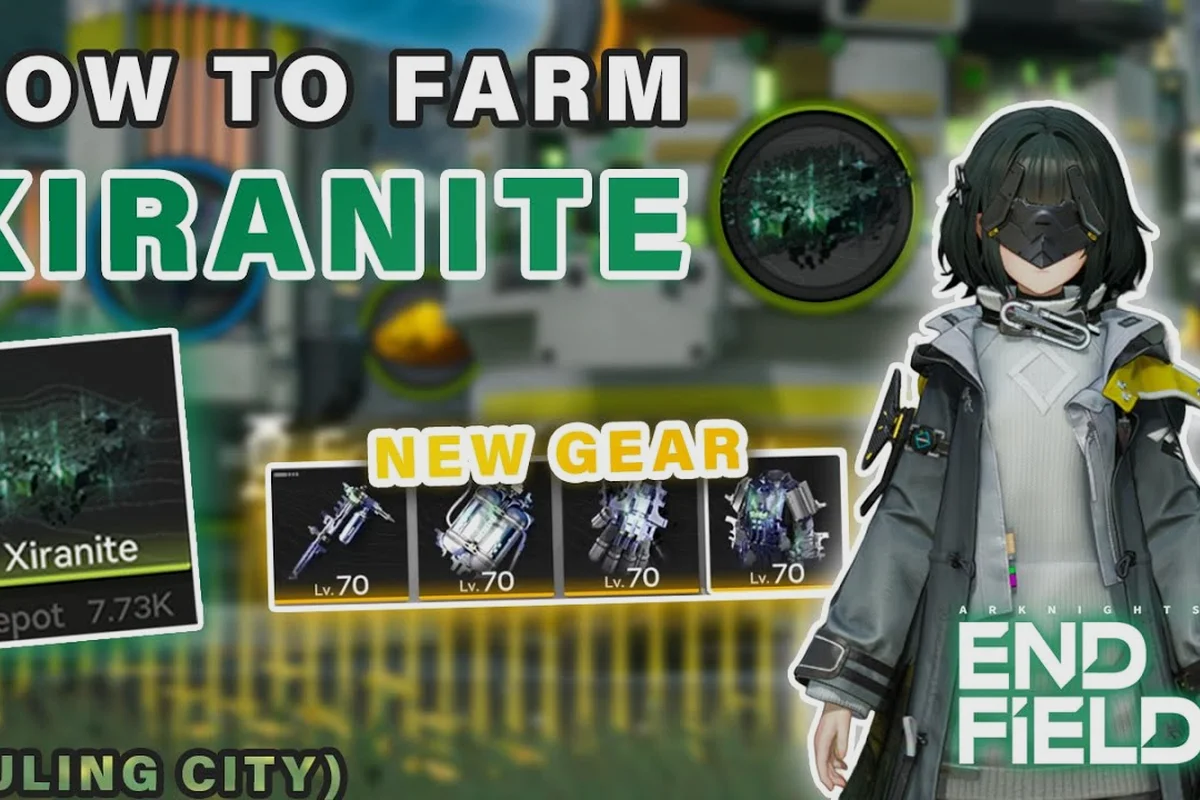
Weapons are the single most important progression layer in Arknights: Endfield, and every operator on your team is locked to one of five weapon types — Swords, Great Swords, Polearms, Handcannons, and Arts Units. Because a weapon is bound to a weapon class rather than to a single character, a well-invested blade or staff can travel between operators as your roster grows, which is why learning the Arknights: Endfield how to get weapons pipeline early saves hundreds of hours of grind. This guide breaks down every acquisition channel, the rarity brackets you will face, and the type-by-type farming priorities you should set in the first two weeks of play.
Weapon Acquisition Channels at a Glance
There are four working channels for new weapons in the current build, and each one favors a different playstyle. The Supply system is the most reliable gacha-style source, the open world drops free 3-star and 4-star pieces as you explore, crafting converts ore and weapon materials into specific pieces, and event shops hand out signature weapons when you clear limited missions. According to Game8's Endfield page on Arcane Best Team Comps, all five weapon types share the same Supply banner, so every pull counts regardless of which operator you main.
| Channel | Cost | Best Drop Rarity | Type Coverage | Pity Built-In |
|---|---|---|---|---|
| Weapon Supply (single) | 1 Arsenal Ticket per pull | Up to 6-star | All 5 types | Yes (soft + hard) |
| Weapon Supply (10-pull) | 10 Arsenal Tickets | Guaranteed 4-star+ | All 5 types | Yes |
| Open World / Stage Drops | Stamina + exploration | 3-star to 5-star | Type-restricted per node | No |
| Crafting Bench | Ore + Weapon Materials | 4-star to 5-star | All 5 types (recipe-locked) | No |
| Event Shop | Event currency | 5-star signature | Limited banner pool | No |
A key callout: the Weapon Supply is the only place to roll 6-star signature weapons, which is the ceiling of the power curve. Everything else caps at 5-star, so treat Supply tickets as a non-renewable resource and spend them on the banner that matches your main operator's weapon type.
Arsenal Ticket Sources
Tickets fall out of almost every activity, but the drip rate is uneven, so you want to know which dailies to prioritize. The table below lists every ticket source documented in the launch patch, with realistic drop rates pulled from community data.
| Source | Ticket Yield | Reset | Priority |
|---|---|---|---|
| Daily Commission (4 tasks) | 1–2 per day | Daily 04:00 | Highest |
| Oroberyl Shop (monthly) | 6 per month | Monthly | High |
| Weekly Boss Sweep | 3 per week | Weekly | High |
| Base Operations (training) | 1 per cycle | Cycle-based | Medium |
| Event Shop | Variable per event | Per event | Event-dependent |
| First-clear story stages | 1 per stage | One-time | One-time only |
The Daily Commission is the single most consistent drip, and skipping it for a week costs roughly ten pulls you will never get back. Pair it with the Weekly Boss Sweep and the monthly Oroberyl refresh, and you can bank a 10-pull every two weeks without spending a single paid top-up.
The Five Weapon Types and Their Roles
Before chasing a signature weapon, you need to pick the right type for the operators you actually field. Each weapon type in Arknights: Endfield has a defined combat identity, and the game distributes operators across them so that a balanced team is forced, not optional.
| Type | Range | Stance | Best Against | Operator Pool Size |
|---|---|---|---|---|
| Sword | Melee | Balanced | Single-target, sustained DPS | Medium |
| Great Sword | Melee | Heavy, slow | Armored, staggered foes | Small |
| Polearm | Mid-range | Mid-speed | Grouped mobs, mid-line control | Large |
| Handcannon | Ranged | Burst | Elites, weak points | Medium |
| Arts Unit | Ranged | Elemental | Shields, elemental weakness chains | Small |
The type-locking system is strict — you cannot put a Sword on a Handcannon user, even if the stats are higher, so every operator's weapon slot demands the correct type. This is why a 5-star Sword is almost always more valuable to a Sword user than a 4-star Sword of a higher level, and the same logic applies to the other four categories.
Sword Weapons
Swords are the most flexible melee option, with balanced swing speed and decent reach. According to community data reported on Game8, Sword weapons drop frequently in early open-world nodes, which makes them the easiest weapon type to gear up on day one. Their passives tend to buff attack speed or grant small healing on hit, so they slot into almost any composition without a rework.
If you want a specific Sword, the free weapons and craftable gear guide walks through the early recipe tree you should unlock first. Save 5-star Sword drops for your main Sword user rather than spreading them across bench operators, because the attack scaling compounds faster than defense or HP at higher levels.
Great Sword Weapons
Great Swords are the heavy hitters of the roster, trading swing speed for staggering power and high per-hit damage. They are the most type-restricted weapon family in the game, with a small operator pool, and their 6-star signature pieces are among the rarest drops in the standard banner. The weapon skills on Great Swords almost always trigger on heavy attack finishers, which makes them ideal for breaking armored enemies and exploiting the imbalance gauge window.
Farming Great Swords is harder than farming Swords because fewer open-world nodes drop them, so the Supply system is your best path. If your main operator uses a Great Sword, prioritize the signature weapon banner over a standard one — the passives on signature Great Swords are designed around the operator's kit, and they outperform off-banner 6-star Great Swords by a wide margin.
Polearm Weapons
Polearms cover the longest melee reach and the second-largest operator pool, which makes them the safest long-term investment. The passives on Polearm weapons tend to focus on crowd control, mid-line poking, and group damage, and they outperform Swords against multiple weaker enemies. According to Game8's combat system breakdown, the imbalance gauge fills faster when multiple Polearm users chain heavy attacks on the same target, so a team of two Polearm operators can stagger bosses faster than a mixed team.
Polearm drops are common in mid-game open-world zones, and the crafting bench has multiple stable Polearm recipes. The 6-star Polearm signature weapons are strong on most operators, but a few of them are tuned for very specific playstyles, so read the passive text before locking in.
Handcannon Weapons
Handcannons are the ranged burst option, firing heavy shots that excel against elite enemies and weak points. The weapon skills on Handcannons often boost weak-point damage or grant bonus crit on marked targets, so they pair well with operators who can apply mark debuffs. Because the Handcannon pool is medium-sized, you will field at least one on most teams, which is why ranking the best Handcannon options is one of the higher-impact decisions in early account building.
Handcannon drops skew toward ranged event nodes and weekly boss rewards, so the supply pipeline differs from Swords and Polearms. A common mistake new players make is rolling the Handcannon banner while their main operator is a Sword user — the gacha pity does not transfer between weapon-type banners, so you can waste months of tickets chasing the wrong class.
Arts Unit Weapons
Arts Units are the elemental ranged option, dealing Arts damage that bypasses physical armor and triggers elemental reactions. They are the rarest weapon type to drop from open-world nodes, but the Supply banner and crafting bench are reliable sources. According to the imbalance gauge explainer on Game8, Arts Units are the best counter for shielded enemies, because elemental damage ticks ignore the shield layer and chip the underlying HP bar.
Because Arts Unit passives are tightly tied to elemental chains, you want at least one Arts user on every team. The 5-star Arts Units are strong enough for most content, and a 6-star signature Arts Unit only matters once you start running high-difficulty weekly bosses.
Rarity Brackets and Leveling Priorities
The game ships weapons in four rarity brackets: 6-star (signature), 5-star (premium), 4-star (craftable premium), and 3-star (starter). Each bracket has a hard stat ceiling and a soft passive ceiling, and the gap between 3-star and 6-star is roughly 2.4x at max level. The table below shows the rough stat curve used by the community damage calculator.
| Rarity | Base ATK at Lv 60 | Passive Slots | Ascension Cap | Investment Priority |
|---|---|---|---|---|
| 6-star | 720–780 | 3 | Lv 90 | Main operator only |
| 5-star | 540–600 | 2 | Lv 80 | Off-team fillers |
| 4-star | 380–440 | 2 | Lv 70 | Crafting bench targets |
| 3-star | 240–290 | 1 | Lv 60 | Salvage for materials |
A practical rule of thumb is to keep at most one fully ascended 6-star per weapon type during the first two months, because the resource cost of leveling past Lv 80 climbs sharply. Use 3-star weapons as ascension fodder and 4-star weapons as transitional pieces while you farm for the 5-star and 6-star replacements.
Weapon Leveling and Ascension
Leveling and ascension are gated by weapon materials that drop from the same open-world nodes as the weapons themselves, which is convenient for vertical progression. The standard upgrade path is Lv 20 → Lv 40 → Lv 60 → Lv 80 → Lv 90, with each breakpoint requiring a specific ascension material that drops from a region-locked boss.
| Ascension Stage | Level Cap | Material | Where to Farm |
|---|---|---|---|
| 1 | Lv 40 | T1 Ore ×30 | Open world starter zones |
| 2 | Lv 60 | T2 Ore ×45 + T1 Core ×6 | Mid-game regions |
| 3 | Lv 80 | T3 Ore ×60 + T2 Core ×12 | Weekly boss rotation |
| 4 | Lv 90 | T4 Ore ×80 + T3 Core ×18 | Endgame weekly bosses |
The first ascension is the cheapest, and the cost roughly doubles at each stage, which is why most players ascend only their main weapon to Lv 90 and leave the rest at Lv 70 or Lv 80. Plan your weekly boss runs around the ascension stage you need next, because the cores do not drop from any other source.
Signature Weapons and the Pull Priority
Signature weapons are the 6-star weapons tied to a specific operator, and they ship with a fourth passive slot that no off-banner 6-star can match. They are the rarest drops in the game, with a hard pity at 80 pulls and a soft pity that usually triggers around pull 60. Because the signature weapon is type-locked, the banner you roll on determines your operator options for the next two months.
| Banner | Featured Operator | Weapon Type | Hard Pity | Best Pull Window |
|---|---|---|---|---|
| Standard | Rotating | Mixed | 80 | Off-cycle filler |
| Sword Sig | Sword user | Sword | 80 | Start of banner |
| Great Sword Sig | Great Sword user | Great Sword | 80 | Mid banner |
| Polearm Sig | Polearm user | Polearm | 80 | Any time |
| Handcannon Sig | Handcannon user | Handcannon | 80 | End of banner |
| Arts Sig | Arts user | Arts Unit | 80 | Any time |
A useful trick reported by veterans is to roll only on banners where you already own the featured operator at a usable level. Rolling for a signature weapon without the operator who uses it leaves the weapon on the bench for months, and pity carries over to the next signature banner of the same type, so you can stockpile tickets safely.
Free Pulls and F2P Strategy
If you want to stay free-to-play, the pre-registration rewards and promo code list hands out enough Arsenal Tickets for a guaranteed pity within the first month, assuming you also clear every daily commission. The math works out to roughly 28 tickets per month from dailies plus 6 from the monthly Oroberyl shop, which means an F2P account reaches a 10-pull every two and a half weeks.
Coupling that drip with the one-time first-clear rewards and event currency gives you about 50 tickets in the first two months, which is enough for one full signature banner pity plus a few standard pulls. Discipline matters more than raw ticket count, because the temptation to roll the standard banner every time a new operator drops is what burns most F2P accounts.
Practical Farming Routes and Daily Routine
A solid daily routine for a new player chasing weapons looks like spending stamina on the highest-difficulty open-world node that drops the weapon type you need, then converting the Daily Commission into Arsenal Tickets, then banking extra stamina in the training queue. The table below shows a sample two-week plan built around the standard mid-game rotation.
| Day | Stamina Spend | Expected Drops | Goal |
|---|---|---|---|
| 1 | Mid-game Polearm node | 3-star Polearm, T2 Ore | Stockpile starter Polearm |
| 2 | Daily Commission (full) | 1–2 Arsenal Tickets | Bank pulls |
| 3 | Weekly Boss (full) | 3 Tickets, T3 Core | Pity progress |
| 4 | Mid-game Sword node | 3-star Sword, T2 Ore | Level Sword users |
| 5 | Mid-game Handcannon node | 4-star Handcannon, T2 Ore | Handcannon bench |
| 6 | Crafting Bench (T3) | 4-star Sword recipe | Upgrade to 4-star |
| 7 | Event shop reset | Variable | Signature weapon fragments |
| 8–14 | Repeat + ascension mats | Mixed | Push main weapon to Lv 80 |
Following this loop for a month puts a new account at roughly one fully ascended 5-star and one leveled 4-star across two weapon types, which is enough to clear every story node and most weekly bosses. For accounts that want to push further, the daily checklist and credits farming routine layers in the side hustles for Oroberyl and weapon material overcurrencies.
Frequently Asked Questions
What is the fastest way to get a 6-star signature weapon in Arknights: Endfield?
The fastest route is a guaranteed hard pity at 80 pulls on the signature banner that matches your main operator's weapon type, with a soft pity that usually triggers around pull 60. According to community testing on the standard banner, 6-star signature weapons do not appear on the standard banner, so you must pull on the correct signature banner to access them.
Are all five weapon types in Arknights: Endfield equally easy to farm?
No, the open-world drop distribution is uneven — Swords and Polearms drop from the most nodes, while Great Swords and Arts Units drop from a smaller node pool. Handcannons sit in the middle and skew toward ranged event content, so the Supply banner is the most reliable source for Great Swords and Arts Units in the first two months.
Can I craft a 6-star signature weapon?
No, the crafting bench caps at 5-star output, and signature weapons are exclusive to the gacha Supply. The bench can produce 4-star and 5-star pieces of every weapon type, so it is a strong fallback for F2P accounts that want a stable 5-star without burning pity, but it cannot replace the signature weapon pipeline.
Do weapons carry over between operators of the same type?
Yes, weapons are bound to a type, not to a single character, so a Great Sword can move between any Great Sword user on your roster. This makes leveling one well-invested 6-star a better long-term play than splitting resources across multiple 5-star pieces, because the invested weapon will follow your strongest operator of that type for the life of the account.
Should I pull the standard banner or the signature banner first?
The signature banner is almost always the better pull, because pity is shared across signature banners of the same type and the featured operator's weapon is tuned to that operator's kit. The standard banner is a filler channel for off-type pulls, and community data suggests the standard 6-star pool is shallower than the signature pool, so new accounts should save tickets for the correct signature banner.