
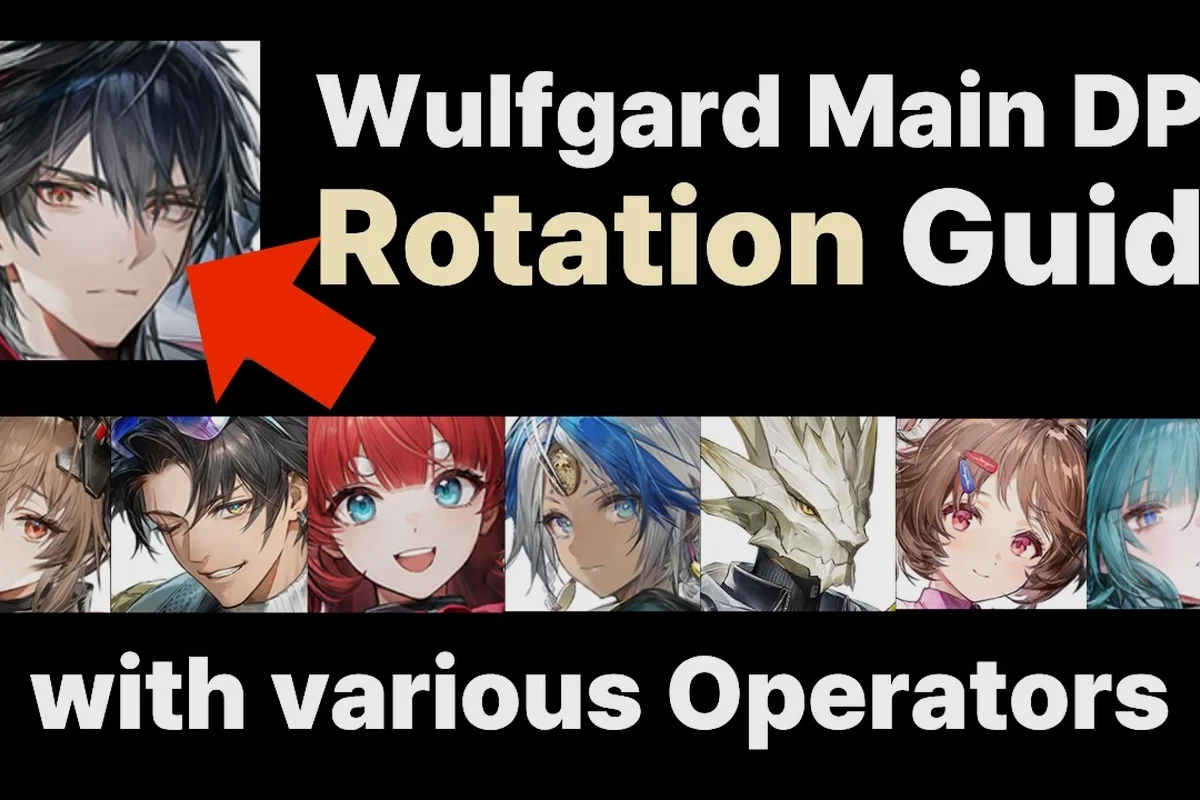
Arknights: Endfield Wulfgard is the kind of back-line Arts caster that quietly defines a team comp, and figuring out his kit before pulling the trigger on a banner saves weeks of regret. Get the operator's role, element, and skill timing right, and the rest of the squad clicks into place around the Heat pressure he brings to every encounter.
Wulfgard at a Glance — Class, Element, and Combat Identity
Wulfgard slots into the Caster class and leans on Heat damage as his primary offensive element, which makes him a full Arts threat rather than a physical bruiser. According to community testing on the Game8's Endfield page on Missions, the game splits damage into five types — Physical, Heat, Cryo, Electric, and Nature — and Heat sits at the top of the reaction chart for sustained single-target pressure. Wulfgard's identity is built around applying that Heat application while also contributing raw stagger value through heavy attacks.
The shared skill gauge mechanic in Endfield matters more for Wulfgard than it does for most Casters, because every heavy hit he lands pushes a segment back into the team pool. That makes him a self-sustaining engine: the more he hits, the more combo skills his team gets to fire, which loops back into more imbalance windows for him to punish. Players who treat him as a passive damage sponge miss the point — the value lives in the gauge economy, not the raw numbers on the tooltip.
| Attribute | Wulfgard | Typical Caster | Notes |
|---|---|---|---|
| Class | Caster | Caster | Back-line Arts damage |
| Element | Heat | Mixed | Enables Burn and Combustion reactions |
| Primary Role | Arts damage / Gauge feeder | Arts carry | Heavy hits refund shared gauge |
| Stagger Tool | Heavy attack chain | Variable | Pivots imbalance windows |
| Team Synergy | Heat / Cryo pairings | Element-flexible | Best with a second elemental DPS |
Because the combat team is only four slots and the gauge is shared, doubling up on two damage classes usually beats a perfectly balanced spread, which is exactly the environment Wulfgard thrives in. Pair him with a second Heat applier or a Cryo partner and the Arts reaction layer starts producing real numbers rather than just flavor text on a status bar.
Skill Kit Breakdown — Tactical, Combo, and Ultimate
Wulfgard's kit is built around three layers: a tactical skill that spends a gauge segment for immediate value, a combo skill that chains with a partner for amplified payoff, and an ultimate that charges independently and ignores the shared pool. Each layer pulls a different weight depending on the encounter, and learning when to spend versus bank is the difference between a clean clear and a wipe at the 70% mark.
Tactical Skill — Heat Wave
Heat Wave is the bread-and-butter ability and the reason Wulfgard spends gauge segments instead of hoarding them. Activation triggers a forward cone of Heat damage that applies the Burn status on every enemy it tags, and the stagger value is high enough to interrupt most non-boss attack chains. The community-tested pattern is to fire Heat Wave on cooldown rather than saving it for a burst window, because the Burn ticks keep refilling the shared gauge and create a constant flow of combo opportunities for the rest of the squad.
The downside is positioning — Heat Wave has a shorter effective range than its animation suggests, and a misaligned cast often hits fewer targets than expected. According to player reports compiled on the Arknights: Endfield combo skill chaining guide, the optimal opener is to dash in, land a heavy attack to seed the gauge, then immediately fire Heat Wave so the stagger window overlaps with the Burn application.
Combo Skill — Searing Link
Searing Link is where Wulfgard's team-building pressure shows up, because combo skills are gated by a partner operator and a pre-planned pairing. Wulfgard's combo multiplies the Burn damage on the target and adds a second Heat application that triggers an immediate Arts reaction if a Cryo or Electric partner is in play. The community-recommended pairing is Wulfgard plus a Cryo applier, because Combustion (Heat + Cryo) is one of the highest single-instance damage reactions in the current patch.
Players who skip the pre-fight planning step lose most of Searing Link's value, because the combo window only stays open for a few seconds after the initial tactical cast. A common pattern documented by testers is to fire Heat Wave, then swap to the combo partner for their tactical skill, then snap back to Wulfgard to land the Searing Link finisher inside the same imbalance window.
Ultimate — Crimson Detonation
Crimson Detonation charges on its own meter and ignores the shared gauge entirely, which means Wulfgard can bank an ultimate while the rest of the team spends freely on tactical and combo skills. The payoff is a single massive Heat strike that detonates every Burn stack on the target, scaling hard against bosses that have been Burned for several rotations. The community-recommended timing is to pop Crimson Detonation right after a Searing Link chain, because the combo's amplified Burn stacks feed straight into the ultimate's multiplier.
| Skill Layer | Resource Cost | Window | Best Use Case |
|---|---|---|---|
| Heat Wave | 1 gauge segment | Immediate | Cooldown cycling, gauge refund |
| Searing Link | 1 gauge segment + partner | ~4 seconds | Burst windows, Arts reactions |
| Crimson Detonation | Independent ultimate meter | Full charge | Boss executes, stacked Burn |
The layered design is deliberate, and it rewards players who plan the next ten seconds rather than reacting to whatever the enemy is doing. A Wulfgard pilot who rotates Heat Wave, Searing Link, and Crimson Detonation in sequence will out-damage a pilot who treats each skill as an independent cooldown.
Elemental Synergy and Reaction Layering
Wulfgard's Heat application is the entry point to Endfield's Arts reaction system, and the operator's value scales directly with how well the team exploits the reaction layer. According to the Arknights: Endfield element and Arts reaction reference, Arts reactions are built from the five damage types, and team building is partly an exercise in picking two damage types your operators can actually apply at the same time. Wulfgard's Heat pairs cleanly with three reactions, and each pairing reshapes how the team should be built around him.
Combustion — Heat + Cryo
Combustion is the most efficient single-target reaction in the current patch, and pairing Wulfgard with a Cryo applier is the most common build path for boss fights. The reaction multiplies the triggering instance of damage, so a Searing Link chain that lands Combustion on a fully-stacked Burn target often one-shots elite enemies that other compositions have to whittle down over two full rotations. A Cryo operator such as Yvonne, Last Rite, or Snowshine fits the partner slot, while Laevatain is a same-element Heat partner rather than a reaction trigger. The team synergy math usually works out to two Heat appliers and one Cryo trigger if the slot count allows.
Overload — Heat + Electric
Overload trades Combustion's single-target burst for area-of-effect damage, and it pairs Wulfgard with Electric Casters who can apply Shock across groups. This is the build path for swarm encounters and defense waves, where the goal is not to burst one boss down but to clear the screen before the stagger chain breaks. The community-tested pattern is to let Wulfgard seed Burn, then have the Electric partner apply Shock on the same target, then trigger the Overload reaction with a wide-area tactical skill from a third operator.
Burning — Heat + Nature
Burning is the least common but most sustainable reaction, because the damage-over-time component keeps ticking even after Wulfgard swaps out. Nature partners are rare in the current roster, so this build is more of a future-proofing investment than a current-patch staple, but operators like Gilberta (cited in the combat reference) and the wider Nature pool make it worth tracking as the roster grows.
| Reaction | Trigger Pair | Best Encounter Type | Damage Profile |
|---|---|---|---|
| Combustion | Heat + Cryo | Single boss, elites | Burst, single-target |
| Overload | Heat + Electric | Swarms, waves | AoE, sustained |
| Burning | Heat + Nature | Long fights, attrition | DoT, off-field |
The reaction layer is the part of Wulfgard's kit that scales hardest with roster depth, and players who plan around pulling a Cryo or Electric partner unlock a damage profile that pure Heat stacking cannot match. For a broader look at how operator elements interact across the roster, the Arknights: Endfield team synergy guide covers the full pairing matrix.
Team Compositions Built Around Wulfgard
Wulfgard's team-building value comes from the fact that he covers two roles at once: a Heat damage carry and a gauge-refund engine for the rest of the squad. That double duty means the three remaining slots are best spent on a reaction partner, a utility operator, and a defensive anchor, rather than on a second damage carry who would compete for the same gauge segments.
Boss-Kill Composition — Wulfgard / Cryo Partner / Utility / Defender
The classic boss-kill lineup runs Wulfgard in the back-line Arts slot, a Cryo applier (Yvonne or Last Rite) in the reaction slot, a Supporter in the utility slot, and a Defender in the anchor slot. The Defender absorbs pressure while Wulfgard cycles Heat Wave, the Cryo partner triggers Combustion on every Searing Link chain, and the Supporter contributes healing, shields, or gauge acceleration depending on the encounter. Last Rite fits a stagger-recovery role well in encounters that need it, while Arknights Endfield Camille pairs as a flexible third if the encounter needs extra Heat application rather than utility.
Wave-Clear Composition — Wulfgard / Electric Partner / AoE Caster / Vanguard
Wave-clear fights reward Overload stacking over single-target burst, so the optimal lineup swaps the Cryo partner for an Electric applier and replaces the Defender with an AoE Caster or a Vanguard who can keep the gauge topped up during the early engage. Wulfgard still anchors the rotation, but his role shifts from burst finisher to Burn-applier-in-chief, feeding Overload chains that the Electric partner detonates across the entire wave. Arknights Endfield Typhoeus slots in as a Striker option that also contributes Nature, which lets the team pivot to the Burning reaction for the boss add that spawns at the 50% wave-clear threshold in several story encounters.
| Composition | Slot 1 | Slot 2 | Slot 3 | Slot 4 | Best Encounter |
|---|---|---|---|---|---|
| Boss Kill | Wulfgard | Cryo Partner (Yvonne) | Supporter (Ardelia) | Defender | Single boss, elites |
| Wave Clear | Wulfgard | Electric Partner | AoE Caster | Vanguard (Camille) | Swarms, defense |
| Hybrid | Wulfgard | Camille | Gilberta (Supporter) | Defender | Mixed adds, story |
Hybrid Composition — Wulfgard / Flex Damage / Supporter / Defender
The hybrid lineup is the safest default for story content, where encounter design shifts between single-target, waves, and mixed adds without warning. Wulfgard holds the back-line Arts slot, Camille flexes into the second damage slot to cover whichever reaction the encounter calls for, Gilberta or another Supporter handles utility, and the Defender anchors the front while the gauge economy runs. This composition is the easiest to tune on the fly, and the Arknights: Endfield Last Rite build guide covers the artifact and weapon side of the Supporter tuning.
The pattern across all three lineups is the same: Wulfgard does the heavy lifting on Heat application and gauge refund, and the rest of the team exists to convert that pressure into either burst, AoE, or sustained damage depending on the encounter. Trying to build a perfectly balanced spread rarely works because gauge competition becomes the real bottleneck, and doubling up on two damage classes usually beats the balanced default.
Build Path — Weapons, Artifacts, and Investment Priority
Wulfgard's build is straightforward compared to the front-line roles, because the operator's value scales with rotation speed rather than raw stat stacking. The community-tested priority order is gauge acceleration > Heat damage bonus > stagger value > raw attack, which inverts the usual damage-first build path that front-loads raw attack. The reason is mechanical: every heavy attack Wulfgard lands pushes a segment back into the shared pool, so anything that lets him land more heavies per minute multiplies his team's output rather than his own.
Weapon Choices
The current weapon pool for Wulfgard favors Handcannons that boost Heat application and reduce tactical skill cooldowns. A high-roll Heat-damage prefix is the most consistent weapon goal, and a cooldown-reduction substat compounds the rotation speed advantage. Players who pull a signature weapon with both Heat damage and a gauge-acceleration passive should lock it in immediately, because the build path narrows quickly once those two stats are covered.
Artifact Selection
The artifact system in Endfield rewards sets that match the operator's role, and Wulfgard's best-in-slot set bonuses are the ones that trigger on heavy attacks and Burn applications. The Arknights: Endfield best artifacts reference covers the full set list, but the short version is that two-piece bonuses on Heat damage and four-piece bonuses on gauge refund both out-scale raw attack stacking once Wulfgard is past the soft-cap on his base stats.
Investment Priority Order
| Priority | Slot | Goal | Why It Matters |
|---|---|---|---|
| 1 | Skill 1 (Heat Wave) | Level first | Highest uptime, most gauge refund |
| 2 | Ultimate (Crimson Detonation) | Level second | Burst payoff, scales with Burn stacks |
| 3 | Skill 2 (Searing Link) | Level third | Combo timing matters more than level |
| 4 | Talent passives | Level last | Small multipliers, expensive to max |
| 5 | Weapon refinement | Ongoing | Diminishing returns above 3 |
Players who dump resources into the combo skill before maxing Heat Wave usually regret the order, because the tactical skill is the one that runs on cooldown and feeds the gauge loop. Crimson Detonation is the second priority because the ultimate's multiplier scales harder with level than the other two skills, and a level gap between the ultimate and the rest of the kit often shows up as a missed execute window on a low-HP boss.
Frequently Asked Questions
What role does Wulfgard fill in an Arknights: Endfield team?
Wulfgard fills the Caster slot as a Heat-damage artillerist and gauge-refund engine, holding the back line while feeding the shared skill pool that powers combo chains. The operator's identity is closer to a self-sustaining Arts carry than a passive tank, and the value comes from rotation speed and Burn application rather than raw stat stacking.
Which operators pair best with Wulfgard for boss fights?
For single-target boss damage, pair Wulfgard with a Cryo applier like Yvonne to trigger the Combustion reaction on every Searing Link chain, then add a Supporter such as Ardelia and a Defender to round out the four-slot team. The Cryo partner is the non-negotiable slot because Combustion is the highest single-instance damage reaction in the current patch, and Wulfgard's Heat application is what makes the pairing work.
Is Wulfgard viable without a reaction partner?
Yes, but the damage ceiling drops noticeably. Pure Heat stacking works for general story content where reaction windows are short, but boss fights and elite encounters reward the reaction layer heavily, and skipping the partner slot usually means a longer clear time. Players who cannot field a Cryo or Electric partner should still run Wulfgard, but expect a roughly 30% drop in burst damage compared to a fully-synergized lineup.
How does Wulfgard compare to Typhoeus or Camille as an elemental pick?
Typhoeus leans more toward Nature application and Striker-style gauge acceleration, while Camille brings flexible Heat coverage that can pivot between roles. Wulfgard out-scales both on raw Heat damage and gauge refund, but Typhoeus wins on mobility and Camille wins on adaptability, so the slot choice depends on whether the team needs a burst carry or a flexible third. The Arknights: Endfield 5-star tier list covers the broader meta context for that decision.
What is the biggest mistake new Wulfgard players make?
Treating Heat Wave as a save-for-burst skill rather than a cooldown-cycling tool. The tactical skill is designed to run on cooldown so the Burn ticks keep refilling the shared gauge, and hoarding it for a finisher window usually means the team runs dry on combo resources by the second rotation. The community-tested pattern is fire, heavy-attack chain, fire again, and let the gauge economy handle the burst.