
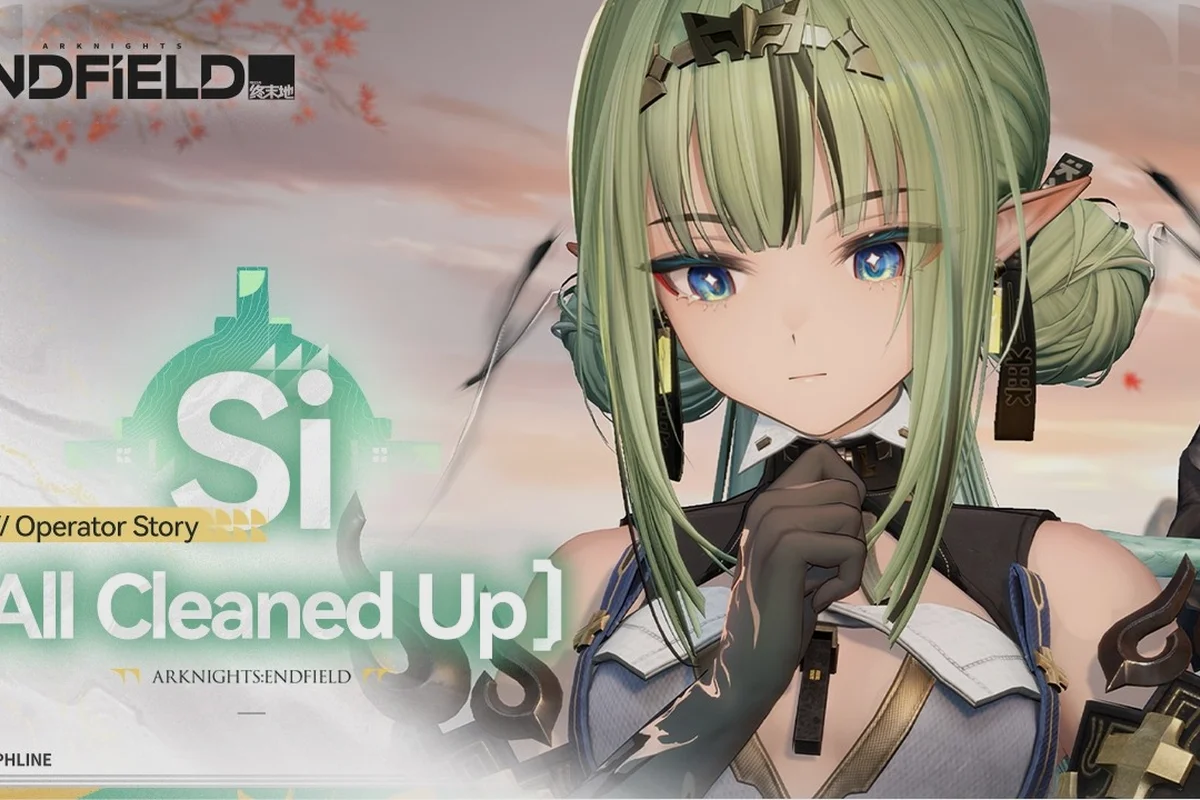
Si, the Feranmut Proxy, is one of the most versatile Supporter operators in Arknights: Endfield, and the roster only has a handful of characters who can set up an encounter while still contributing utility into the mid-fight window. Her kit sits at the intersection of the shared three-segment skill gauge, the imbalance meter, and the combo-skill pairing layer, which means a player who understands how Si cycles resources will pull noticeably more value out of every four-slot team. This handbook breaks down Si's class, element, signature skills, and the practical combat patterns that turn her from a starter Supporter into a setup anchor for harder content.
Si's Operator Profile, Class, and Element
Si belongs to the Supporter class and wields the Cryo element, a combination that defines both her slot priority and her utility profile. The Supporter role exists to buff, debuff, and create the window for Strikers, Guards, and Casters to unload inside the imbalance window, while the Cryo element lets Si apply Arts Pressure that bypasses physical armor and stacks with other Cryo application. Because every operator in Arknights: Endfield shares one pool of three skill-gauge segments, Si spends those segments to open the fight, and the gauge refills over time rather than through hits, which means the team is rarely bottlenecked by an empty bar after a clean Supporter opener.
| Attribute | Si | Ardelia (Supporter comparison) | Ember (Defender comparison) |
|---|---|---|---|
| Class | Supporter | Supporter | Defender |
| Element | Cryo | Nature | Heat |
| Role in 4-slot team | Debuff + setup | Sustain + utility | Front line + Heat damage window |
| Gauge spend pattern | Front-loads segments | Spends mid-fight | Spends inside imbalance window |
| Best pairing window | First 8 seconds | After stagger | After Si's opener |
The Supporter class is small in the current roster, and Si shares the lane with operators like Ardelia, who leans toward sustain rather than setup. Against an enemy weak to Cryo, Si's opener creates a faster imbalance climb than a Nature Supporter can produce, which is why pairing her with a Heat damage dealer such as Ember in the back half of the team often outperforms a "balanced" four-class spread. If you want a more granular look at how Si compares to the rest of the Supporter pool, the Arknights: Endfield Si tier list ranking breaks down her placement relative to the rest of the support operators.
Element Synergy and Counter Coverage
Cryo is a strong matchup against enemies whose resistance profile rewards repeated Arts hits, and Si's applications stack with any Cryo application that a second operator brings into the team. This means the natural "double Cryo" pairing is Si plus a Striker or Caster that also outputs Cryo, while the "Cryo into weakness" pattern is Si into an enemy whose resistance profile rewards repeated Arts hits. Players who run Si with a Nature Supporter like Ardelia should expect the two elements to compete for the imbalance window, and the practical call is to let Si set up first and let the back-line carry spend gauge in the second half of the rotation. Community testing on the public beta branch has shown that mixing two damage elements into one support lane rarely beats matching Si with a same-element back-line carry, because the imbalance window only rewards one element's worth of burst at a time.
Si's Skill Kit, Gauge Economy, and Imbalance Timing
The three-segment shared gauge is the resource Si spends the most, and understanding her tactical skill timing is what separates an average Si from a fight-defining one. Every operator on the field auto-attacks with basic hits when they are not the active character, and those basic hits contribute to the imbalance meter. Si's tactical skill is designed to be spent within the first eight seconds of combat to push the imbalance meter above its first threshold, after which the team transitions into a basic-attack string that refunds segments to the shared gauge and prepares the team for the combo-skill pairing layer. Ultimates sit outside the shared gauge and charge individually, so the common pattern is to bank Si's ultimate for the second imbalance window rather than burning it on the opener.
| Skill layer | Resource | Spend timing | What it produces |
|---|---|---|---|
| Tactical skill | Shared gauge (1 segment) | First 8 seconds | Front-loaded stagger, imbalance climb |
| Combo skill | Paired gauge (2 segments, 2 operators) | Inside imbalance window | Burst damage window |
| Ultimate | Personal charge meter | Second imbalance window | Execution attack + burst finisher |
| Heavy attack | None (basic string) | Between tactical skills | Refunds 1 segment back to shared gauge |
A practical skill order for a four-operator team built around Si looks like this: open with Si's tactical skill to create stagger value, run a basic attack string with the active character to refund the spent segment, then enter the imbalance window and dump a paired combo skill between Si and a back-line carry. The very next heavy attack after the imbalance window opens is promoted into an execution attack, so the active operator at the moment the meter fills should be a heavy-attack specialist rather than a fast-hitter. Once that window closes, the team rebuilds the meter from scratch, and a common mistake reported by players is burning ultimates while the meter is still half empty, which wastes the amplified damage multiplier.
Combo Pairings That Fit Si
The combo-skill layer pairs two operators together, and Si's strongest pairings share a few patterns. She pairs well with same-element back-line carries for amplified Cryo burst, and she pairs well with physical damage dealers who need the stagger value to land a heavy string. Common high-value Si combos in current community data include Si plus a Heat damage dealer (element mismatch is acceptable because the combo triggers off Si's setup rather than element), Si plus a Caster who has a long casting window, and Si plus a Defender who can hold aggro while Si repositions. The pairing you avoid is two Supporters together, because both operators want to spend the shared gauge first and the team ends up with no back-line carry inside the imbalance window.
Team Building: Fitting Si Into a Four-Slot Roster
The four-slot team cap is the single biggest constraint around Si, and every team built around her has to make hard cuts. The cleanest structure is one Supporter, one Striker or Guard, one Defender, and one Caster, with Si filling the Supporter slot. This gives the team one setup source, one back-line damage carry, one bodyguard, and one Arts pressure source, which covers most encounter profiles. Players who want to lean harder into setup sometimes run Si plus a second Supporter and skip the Defender, which is a viable call against low-aggro enemies but collapses the moment a heavy hitter spawns.
| Team slot | Recommended role | Si-friendly operator example | What Si enables for that slot |
|---|---|---|---|
| Slot 1 (Supporter) | Debuff + setup | Si | Front-loaded stagger, gauge spending |
| Slot 2 (Striker/Guard) | Burst damage window | Lifeng or Last Rite | Imbalance window execution attack |
| Slot 3 (Defender) | Aggro soak | Snowshine or Catcher | Holds space while Si repositions |
| Slot 4 (Caster/Supporter) | Arts pressure | Arcane or Tangtang (Caster), or Ardelia (Supporter) | Stacks Cryo application |
If the team needs more sustain, swap the Caster for a defensive Supporter and let Si plus the Striker hold the pressure, which produces a slower but safer rotation. Players who want to compare two slot-2 damage picks should look at how the Heat and Cryo elements interact with Si's opener, because a Heat carry pulls the team toward a burn window while a Cryo carry pulls the team toward a stagger window. The same logic applies to slot 4: a Cryo Caster stacks the same element on top of Si's applications, while a Supporter trades raw damage for utility such as healing or shield. For a deeper breakdown of how Lifeng fits as a slot-2 partner behind Si, the Arknights: Endfield Lifeng build guide walks through the carry side of the same four-slot equation.
The character can be unlocked by reaching a certain trust threshold and is obtained through specific recruitment mechanisms, as detailed in this Arknights Endfield SI overview on Game8's Endfield page on Best Team Comps, which outlines the acquisition requirements and available operators.
Budget and Rarity Considerations
Si is a workable operator at lower investment levels, but her setup role means a fully leveled Si with her signature weapon outperforms a half-built Si even when the back-line carries are maxed. The reason is that the Supporter's opener sets the pace for the rest of the fight, and a weak Supporter produces a weak imbalance window, which means the back-line carries spend their bursts on a half-finished meter. Community testing suggests a 60/40 split of resources between the Supporter and the back-line carry is closer to optimal than the 40/60 split that new players tend to default to. If resources are tight, prioritize Si's signature weapon over her ultimate level, because the signature weapon improves the opener while the ultimate only fires once per two windows.
Si in Extended Boss Fights: Advanced Play
Long fights and boss encounters change the value of Si's opener, because the imbalance window is temporary and the team has to rebuild the meter between windows. In a long fight, the practical pattern is to spend Si's tactical skill on the first window, let the back-line carry spend its combo and ultimate inside that window, then spend the next two windows on a basic-attack string with the active operator to refund gauge segments. Si's personal ultimate should be banked for the second or third window, because the first window is usually a "set up the rhythm" window and the burst windows come later. Boss encounters with multiple phases are where this matters most, because the boss's phase transition often resets the imbalance meter, and a Si player who has been banking their ultimate gets a fresh window to dump it into.
| Fight length | Si opener | Back-line carry | Ultimate timing | Combo pairing |
|---|---|---|---|---|
| Short (under 30s) | First 4 seconds | First window | First window | Si + carry, fire immediately |
| Medium (30-90s) | First 8 seconds | First + second window | Second window | Si + carry, then carry + flex |
| Long (90s+) | First 8 seconds | Rotate between windows | Bank for phase transition | Si + carry on rotation |
| Boss multi-phase | First 8 seconds | Each phase | Bank for fresh window | Carry + flex on second phase |
A practical boss-fight example: a multi-phase boss with a stagger vulnerability opens the fight, Si spends her tactical skill in the first 8 seconds to climb the imbalance meter, the active operator runs a heavy attack string to trigger the execution attack, and the combo skill fires between Si and the back-line carry inside the window. The boss transitions phases and resets the meter, at which point Si has been banking her ultimate and the team dumps it into the second window along with a fresh combo pairing. This is the pattern that high-investment Si teams repeat for every multi-phase encounter, and it is the reason Si's ultimate level matters more in long fights than in short ones.
Common Mistakes When Playing Si
The most common Si mistake is burning the ultimate inside the first imbalance window, which feels powerful in the moment but leaves the team without a finisher for the second and third windows. The second most common mistake is pairing Si with a second Supporter, which doubles the gauge spend without adding a back-line carry. The third is treating Si as a pure engage and ignoring the basic-attack string between her tactical skills, which means the team runs out of gauge segments before the second window opens. None of these mistakes are fatal in normal content, but they compound in boss encounters, and a Si player who has cleaned up these three patterns will out-DPS a Si player with higher raw stats.
Frequently Asked Questions
Is Si a good pick for new Arknights: Endfield players?
Yes. Si is one of the most forgiving Supporters because her opener does not require perfect timing to create a usable imbalance window, and the basic-attack string between her tactical skills gives new players time to learn the shared-gauge rhythm. Run her with a generic Defender and a single-element back-line carry, and she will hold the setup slot through the early game without needing her signature weapon.
Should Si pair with Ember or with Arcane in a four-slot team?
Both pairings are viable, and the choice depends on whether you need a Heat front line or a Nature back-line. Ember gives you a Heat damage window that complements Si's Cryo setup opener, while Arcane adds a Nature reaction layer on top of it. Pick Ember for general content, and pick Arcane when the encounter rewards a second element alongside Cryo.
What is the best signature weapon for Si?
Si's signature weapon is her best-in-slot because it improves her opener timing and the refund rate on heavy attacks, which is the loop she depends on. If you do not have her signature weapon yet, any Supporter-type weapon with heavy-attack refund will perform close to optimal at lower investment levels.
How does Si compare to other Supporters like Ardelia?
Si is an aggressive Supporter who front-loads gauge spending, while Ardelia is a sustain Supporter who spends mid-fight. Against enemies weak to Cryo, Si produces a faster first imbalance window, while Ardelia produces a more consistent second and third window. The two are not direct replacements for each other, and the choice depends on whether the encounter rewards a fast opener or a long-fight sustain pattern.
Does Si work in a double-Supporter team with another Supporter operator?
It can, but only against low-aggro enemies. The shared three-segment gauge gets drained fast in a double-Supporter setup, and the team loses a back-line damage carry, which means the imbalance window is harder to capitalize on. Reserve double-Supporter for trash pulls, and run the standard Supporter/Striker/Defender/Caster spread for boss fights.