
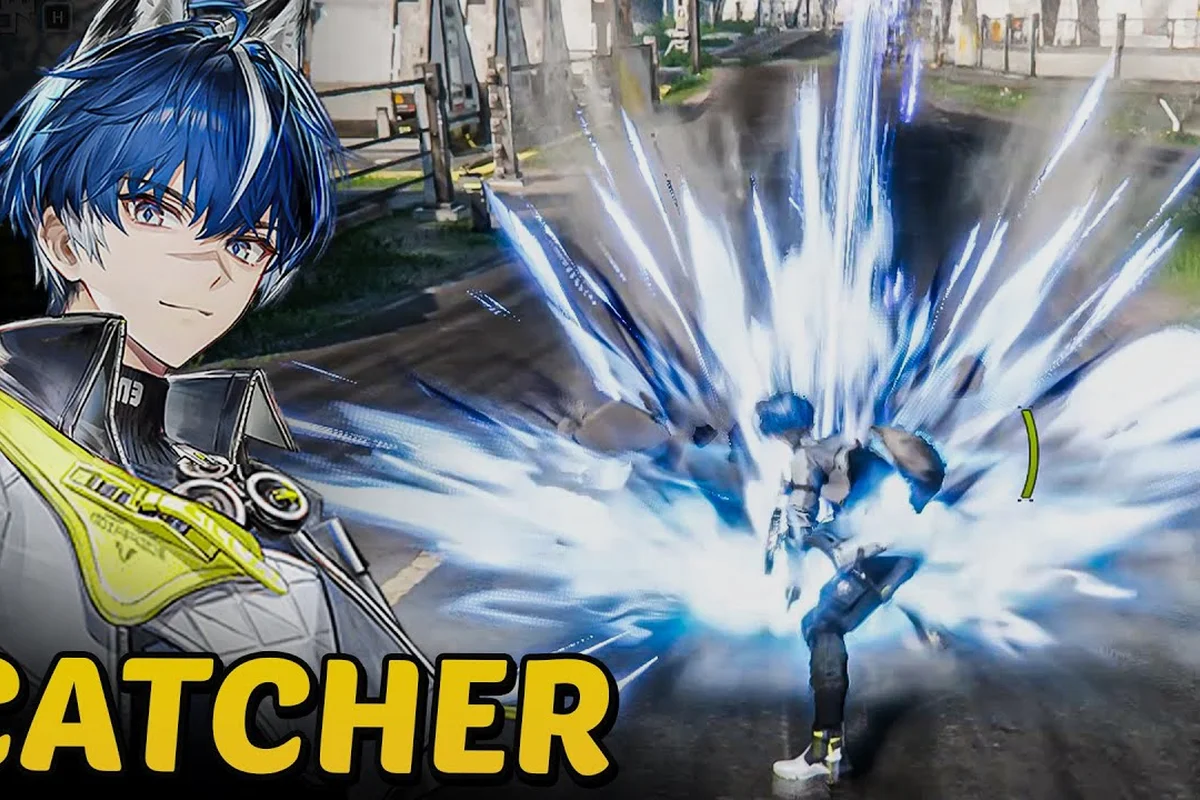
Picking the right frontline anchor for your squad changes the entire feel of a four-operator team, because Defenders live in the awkward space between pure damage and pure utility. They are the class that turns a stalled gauge bar into a fresh burst window, which is the real currency of combat in this game. Below is a full breakdown of how Defenders fit into the six-role system, what they actually do inside a rotation, and where the four-star operator Catcher sits inside that class.
How the Defender Class Fits Into Endfield's Six-Role System
Endfield sorts every operator into one of six classes: Vanguard, Striker, Guard, Defender, Caster, and Supporter — there is no seventh "Catcher" class. Catcher is a four-star Defender operator, and the Defender slot is the one whose job description reads closer to a hybrid between a Stagger-bot and a gauge engine than a pure damage role. Because the combat team is locked to four slots and every operator shares one pool of three skill gauge segments, doubling up on two damage classes usually beats a perfectly balanced spread, and that is exactly where a Defender earns their keep.
| Class | Primary Job in a 4-Slot Team | Skill Gauge Pressure | Typical Pairing |
|---|---|---|---|
| Vanguard | Front-loads the early engage, plants initial buffs | Medium | Any damage class |
| Striker | Sustained single-target and AoE damage | High | Caster or Supporter |
| Guard | Frontline pressure, holds space | Medium | Defender |
| Defender | Absorbs hits, holds chokepoints, extends imbalance | Very High | Striker or Caster |
| Caster | Elemental and Arts pressure | High | Striker or Supporter |
| Supporter | Buffs, debuffs, utility | Low | Any class |
Defenders are the class that converts a heavy-attack string into a fresh gauge segment, which is the single most important resource in a long fight. The rotation loop in the combo skill chaining guide spells this out: open with a tactical skill for stagger value, run your basic attack string to refill the shared gauge, then dump combos and the ultimate inside the imbalance window. Catcher is the operator who makes step two of that loop happen on demand.
Why the Defender Role Is the Sleeper Hybrid
Most new players hear "Defender" and assume the class is a purely defensive tag, but the real identity is closer to a damage-over-time specialist that also happens to refund resources. The class is built around a single mechanical premise: every heavy attack generates a segment of the shared skill gauge, and Defenders are the operators who either land the most heavy attacks per minute or amplify the value of the heavy attacks their allies land.
That second half matters more than the first. A Defender who buffs ally heavy attacks, who extends the imbalanced state, or who converts excess gauge into bonus damage is going to outperform a raw damage dealer once the team reaches the mid-game, because the gauge becomes the bottleneck well before damage does. The imbalance and stagger guide confirms that the imbalance window is temporary and closes the moment your next heavy attack lands without the right setup, so any class that keeps that window open longer has outsized value.
What the Defender Role Brings That Other Classes Don't
Strip the class down to its toolkit and a Defender typically offers three things that no other role covers as efficiently: it converts raw skill economy into window-securing control, hands the off-class slots permission to spend freely on the shared three-segment gauge, and turns the team's otherwise wasted downtime between imbalance phases into bonus multiplier uptime — which is why Estella and Argent Flow, despite their divergent damage profiles, both route through the same finisher-scaling window when paired with a Defender anchor.
-
Gauge acceleration through heavy-attack chains, refund mechanics, or bonus segments on crit
-
Imbalance extension through debuffs, vulnerability windows, or chain-stagger effects
-
Finisher scaling through multipliers that spike during the imbalance window
Compare that to a Striker, who brings sustained damage and nothing else, or a Caster, who brings elemental pressure and gauge hunger. A Defender is the role that lets the rest of the team spend their gauge without worrying about running dry mid-window. In a four-slot team with a shared three-segment gauge, that single property is worth more than another pure damage dealer.
Defender Mechanics in the Shared Gauge System
The shared skill gauge is the single most important resource in any Endfield fight, and Defenders are the class that interacts with it most directly. According to the combat system tips and tricks guide, every operator on the team draws from the same pool of three skill gauge segments, which refill over time rather than by landing hits. The moment you spend a segment on a tactical skill, the gauge does not instantly top back up, which means timing matters more than raw damage output.
| Gauge Source | What It Adds | Defender's Role |
|---|---|---|
| Time-based regen | +1 segment every several seconds | Indirect (more uptime = more Defenders can use skills) |
| Heavy attack | +1 segment on a landed heavy hit | Direct (most Defenders boost heavy attack rate or value) |
| Ultimate | Fully resets gauge on activation | Direct (Defenders often pair with an ult-aligned teammate) |
| Combo skill | Spends gauge but refunds on chain | Direct (Defenders are the most common combo anchors) |
This is the reason the Defender tag sits in the class list at all. A Striker spends gauge to deal damage. A Defender spends gauge to hold space and then uses a kit mechanic to get more gauge back, either personally or for the team. The result is a class that looks weaker on a single-rotation damage meter but outperforms on a sustained five-minute damage meter, which is the format most bosses and high-difficulty content use.
Heavy Attacks and the Imbalance Window
Every enemy has an imbalance value that rises as you land heavy attacks, and when the meter fills the target enters an imbalanced state where incoming damage is amplified and your next heavy attack becomes an execution hit. The imbalance gauge guide points out that this window is temporary, so the practical skill is timing your burst skills and ultimates inside the window rather than firing them while the meter is still half empty.
Defenders are the operators who make that timing forgiving. Through a mix of debuffs, vulnerability windows, and chain-stagger effects, the typical Defender kit turns a three-second imbalance window into a five- or six-second one, which is the difference between a clean clear and a wipe. For players still learning the basics, the imbalance guide for Arknights: Endfield walks through the meter math in detail.
Combo Skill Pairings
Combo skills are the second layer on top of tactical skills, and chaining them lets a team break defenses faster than any single operator can alone. The combo skill chaining guide recommends pre-planning which two operators you want to pair, because the timing of a combo is stricter than the timing of a single tactical skill. Defenders are the most common combo anchor for two reasons: their kit usually triggers a chain condition naturally, and their gauge refund lets the team fire a second combo back-to-back without waiting for regen.
A standard Defender-anchored combo in Arknights: Endfield looks like this in practice: the Defender (often Catcher in sustained fights) opens with a tactical skill that lands a heavy hit, refunds roughly one gauge segment through the kit's passive refund, then immediately hands the chain window to a damage dealer such as Estella or Fluorite, whose chain-eligible skill converts that refund into a second tactical skill activation within the same combo timer, letting Mi Fu or Zhuang Fangyi follow up while the target is still locked in the freshly applied imbalance window rather than waiting for the team's gauge to regenerate.
-
The Defender opens with a tactical skill that lands a heavy attack and refunds a gauge segment.
-
A teammate (usually a Caster or Striker) follows up with a chain-eligible skill.
-
Both operators exit the chain with a freshly topped gauge and a fresh imbalance window on the target.
That pattern is why Defenders scale harder than their raw stats suggest. The numbers on a paper rotation are misleading, because the real value lives in the second and third combo of a long fight, when a team without a Defender has been sitting on an empty gauge for ten seconds.
Frontline Operators Worth Building First
The current Defender pool is small, which makes the ranking exercise more useful than it is for broader classes. Based on community data and the team comp guides, the frontline operators most often discussed in the current patch are Catcher, Estella, Fluorite, Argent Flow, Mi Fu, and Zhuang Fangyi — with Catcher the cheapest entry point at four stars. Each brings a different flavour of the frontline identity, and which one you build first depends on which second class you want to pair them with.
| Operator | Sub-Role | Best Pairing Class | Strength | Weakness |
|---|---|---|---|---|
| Estella | Burst window | Caster or Striker | Massive gauge refund on ult | Long setup window |
| Fluorite | Sustained pressure | Striker | Sustained imbalance pressure | Low single-target burst |
| Argent Flow | Team buffer | Caster or Supporter | Buffs ally heavy attacks | Lower personal damage |
| Mi Fu | Combo chain anchor | Caster | Fastest combo chain cadence | Fragile in long fights |
| Zhuang Fangyi | Hybrid loop | Striker or Guard | Self-sufficient gauge loop | Less specialized |
According to the Game8's Endfield page on Best Characters for OMV Dijiang, the frontline anchor's core mechanics revolve around resource gathering and enemy interception during early-game progression.
Estella — The Burst Window
Estella is the operator most players think of first when they hear "frontline burst", because her kit is built around a single dramatic moment: the ultimate. Her burst window is short, but during that window she converts the entire shared gauge into bonus damage and refunds two segments on activation, which means the team can fire a full combo inside her ult without worrying about running dry. Pairing her with a Caster who can spend those refunded segments in the same window is the standard opener in high-difficulty content.
The downside is the setup. Estella needs at least one combo cycle to charge her ult, and her base-state damage is unimpressive. Teams that try to brute-force early content with her without building a rotation around her ult window tend to drop her quickly. The Estella build on the builds hub covers the gear and skill priority that smooths out that setup phase.
Fluorite — The Sustained Pressure Pick
Fluorite is the pick for players who do not want to play around an ult window. Her kit revolves around a damage-over-time effect that ticks on every heavy attack the team lands, which means she scales naturally with the gauge loop instead of against it. In a long fight against a high-HP boss, Fluorite's total damage output frequently surpasses Estella's because Estella's burst window closes long before the boss does, while Fluorite's DoT keeps ticking.
Estella trades sustained scaling for one of the sharpest single-target burst windows any frontline operator in Arknights: Endfield can field, which makes her the stronger pick for short fights, phase-transition one-shot rotations, and anything that punishes you for letting a DoT ramp. Against a boss with a sub-two-minute enrage or a hard HP gate you need to break before the gauge loop finishes, Fluorite's damage-over-time has not stacked enough ticks to catch up, while Estella's ult combo deletes the bar. Most endgamers keep both built and swap based on the encounter timer and HP pool rather than committing resources to just one frontline pick.
Argent Flow — The Team Buffer
Argent Flow is the most team-dependent operator on this list, but the payoff when the team is built around him is huge. His kit buffs ally heavy attacks, which means every heavy attack the rest of the team lands during his window generates a bonus segment on top of the normal refund. In a coordinated squad, that is the difference between firing one combo per rotation and firing two.
He is the least common pick for new players, because his value is invisible without a team that knows how to capitalize on it. Solo players should prioritize Estella or Fluorite first and come back to Argent Flow once they have a second damage class leveled.
Mi Fu and Zhuang Fangyi — The Niche Options
Mi Fu is the fastest combo chain anchor among the frontline picks, which makes her a strong pick for speedrun teams and time-attack content. Her fragility in long fights is real, though, and she falls off once the encounter extends past two minutes. Zhuang Fangyi is the closest thing the frontline pool has to a self-sufficient hybrid: her kit maintains its own gauge loop without needing ally support, which makes her a strong pick for solo content and story-mode grinding. Neither is a bad operator, but both are more specialized than the top three.
Building a Team Around a Defender
A Defender is not an operator you drop into a random team and expect to perform, because the class scales with the rest of the squad. The team-building advice across the combat guides is consistent: build your team around the Defender, not the other way around. The simplest version of that rule is to pair a Defender with either a Caster or a Striker, then fill the remaining two slots with a Vanguard and a Supporter depending on the encounter.
| Team Slot | Recommended Class | Why |
|---|---|---|
| Slot 1 | Defender (Catcher) | The rotation anchor |
| Slot 2 | Caster or Striker | Spends the gauge the Defender refunds |
| Slot 3 | Vanguard | Seeds the early engage and refunds gauge on kills |
| Slot 4 | Supporter | Buffs the team or covers the elemental mismatch |
That spread is not the only valid comp, but it is the one that consistently clears content at or near the recommended level. The reasoning is that the Vanguard seeds the early engage, the second damage class spends the gauge the Defender generates, and the fourth slot either amplifies the late game (Supporter) or covers the elemental mismatch the encounter demands. Players still working through the early game can find a more detailed progression path in the beginner guide for Arknights: Endfield, which walks through how to actually unlock the operators needed for this comp.
Common Mistakes When Running a Defender
Three mistakes show up repeatedly in community reports on the Arknights: Endfield Catcher and the wider Defender class, each tied to a specific gauge-management failure rather than raw DPS loss. Players from the Estella and Fluorite testing cohorts logged clips where Defenders were sidelined mid-fight because the imbalance meter was allowed to drain to zero, forcing a full rebuild before the Arknights: Endfield Argent Flow window could trigger again. Other reports around Arknights: Endfield Mi Fu and Arknights: Endfield Zhuang Fangyi runs blamed squad overlap — two frontline anchors feeding the same segment instead of chaining debuffs into a Caster's burst — which the imbalance guide flags as a wasted-slot pattern. Each pattern below maps to one of those logged failure modes so you can diagnose your own runs against the same data.
-
Treating the Defender as a damage carry. Defenders are enablers, not carries. Their damage looks low on the meter because most of their value is in the gauge, debuffs, and window extension. Teams that pick a Defender and then build the rest of the squad around a different damage class are leaving value on the table.
-
Ignoring the imbalance window. The window is temporary, and the imbalance guide explicitly calls out that you have to rebuild the meter from scratch once it closes. Defenders that extend or refresh that window are the difference between a clean clear and a stalled fight.
-
Doubling up on the same class. Two Defenders in a four-slot team sounds good on paper, but the shared gauge means they end up competing for the same segments. One Defender plus a Caster or Striker outperforms two Defenders almost every time.
How to Raise a Defender Efficiently
The progression guide for Arknights: Endfield breaks operator leveling into three phases: unlock, ascend, and gear. The Defender class does not need any special handling during the first two phases, but the gear phase is where most players make mistakes. Because Defenders scale with gauge efficiency rather than raw stats, the optimal gear priority is different from a Striker or a Caster.
| Priority | What to Upgrade First | Why |
|---|---|---|
| 1 | Skill levels (tactical + combo) | Direct gauge interaction |
| 2 | Heavy attack bonus stats | Direct gauge generation |
| 3 | Ultimate charge rate | Earlier ult windows = more rotations |
| 4 | Base ATK | Last, because Defender value is not in raw ATK |
The progression guide for Arknights: Endfield covers the resource budgeting for each phase in detail, and the general advice holds: do not over-invest in base ATK on a Defender until skill levels and gauge-related stats are maxed.
Stamina and Material Allocation
Defenders are unusually material-hungry in the mid-game because their skill levels matter more than their weapon levels, and skill levels cost the rarer crafting materials. The community-recommended approach is to level one Defender to skill level 7 or 8 before touching a second, because the jump from skill 4 to skill 7 is where the gauge refund really starts to compound. Spreading materials across two Defenders at skill level 4 each tends to underperform a single Defender at skill level 7 plus a filler Striker at skill level 4.
When to Pull for a Second Defender
The honest answer is later than most players think. A single Defender at high skill level outperforms two Defenders at mid skill level in almost every encounter, because the shared gauge ceiling limits the value of a second one. The right time to pull a second is when the first is fully built and the team has stabilized around them, which is usually two to three weeks into the patch cycle for most players.
Frequently Asked Questions
Is the Defender class worth raising for free-to-play players?
Yes, because one well-built Defender changes the entire feel of a four-operator team without requiring gacha luck to fully upgrade. The class scales with skill levels rather than weapon pulls, which means a free-to-play player can hit the same effective power ceiling as a paying player if they funnel materials into a single Defender. Catcher, Estella, and Fluorite are all strong first picks because their kits work without specific signature weapons.
Which frontline pick pairs best with a Caster?
Estella is the strongest Caster pairing because her ult window converts the entire shared gauge into bonus damage, which the Caster can then spend on an elemental burst in the same window. Argent Flow is the second-best option if the team already has a Caster and wants to amplify heavy attacks across the whole squad. Mi Fu is a niche pick that only works in speedrun comps with a specific Caster partner.
Do I need another frontliner if I run Catcher?
In most content, the safe answer is yes — a second body lets Catcher stay in range and keep landing heavy attacks, which is the only way to keep the gauge loop alive. Skipping the frontline entirely to fit another damage class usually backfires because Catcher ends up spending more time dodging than attacking, which collapses the rotation. The exception is short boss fights where the team can burst the target down before positional pressure matters.
How does the shared gauge affect Defender value?
Defenders are the class most directly tied to the shared gauge, because their entire kit revolves around spending and refunding gauge segments. In a team without a Defender, the gauge becomes the bottleneck after the first combo and the team spends most of the fight waiting for regen. A Defender effectively doubles the number of combos the team can fire in a long fight, which is why the class is rated highly across the team comp guides even when its raw damage numbers look lower than a Striker's.
Can I run Catcher as my only damage dealer?
No, because Catcher's kit is built around enabling a second damage class rather than carrying the team solo. Catcher plus a Caster or Striker is the standard configuration, and he only does meaningful damage when the second class is present to spend the gauge he generates. A solo-frontline comp is a meme build that fails on every encounter that lasts longer than thirty seconds.